
Dry cleaning/laundry facilities energy usage/tips

Ladies at Laudry
 

Dry CleaningEnergy use at a glance

  • The majority of electricity use comes from dry-cleaning machines and reciprocating equipment (such as air compressors, motors and lighting).
  • A steam trap with a valve stuck half-open for half a year can result in an annual fuel cost of over $4,000.
  • Dry cleaning machines use a lot of energy, ranging from .5 kW and greater (per machine), and put off a lot of excess heat, which increases the cooling load in a given space.

Tips & strategies to help save

  • Professional wet cleaning is by far the most energy efficient of the five different cleaning techniques. Switching to wet cleaning could save as much as 75% of the electricity a dry cleaner uses.
  • Avoid usage of high-energy equipment during on-peak time periods and consider staggered start-up every 15 minutes.
  • Implement a chilled water loop system to reduce waste heat from pipes and to cool the pipes themselves, which is an efficient way to reduce the cooling load within a space.
  • A poorly maintained air compressor system can waste between 25% and 35% of its air due to leaks alone.

– Turn off air compressor at the end of every shift/day; at the very least, consider closing the flow valve off to prevent leakage.f

  • Install controls on boilers, such as vent (or flue) dampers that prevent chimney losses by closing off a boiler’s vent when the boiler isn’t firing.

Actual savings may vary and will depend on various factors, including geographic location, weather conditions, equipment installed, usage rates and similar factors.

Open

Personal care services energy usage/tips

Cutting Hair at Salon
 

Personal Care ServicesTypes of businesses in this category include tanning salons, tattoo parlors, saunas, steam baths, ear piercing services, hair removal and weaving salons.

Energy use at a glance

The best places to save, while keeping it comfortable for your customers, would be lighting and cooling.

Tips and strategies to help save

  • 54-watt T5 fluorescent lamps work well for high-bay applications, while 27-watt T5s work well for most other uses.
  • Consider installing motion-activated occupancy sensors in areas that aren’t used by clients or employees; such as bathrooms and utility closets.
  • Install reflective window film to reduce solar heat gain and help keep cooling costs down. Newer window films are not as dark or iridescent-looking as older window films, so building occupants can see outside on most days.
  • Use washing machines during off-peak hours, when electricity prices are the lowest. Buy enough towels for use during business hours so laundry can be done at night. Use front-loading washing machines with high-speed spin cycles to save water and energy used for drying.
  • Gas dryers and natural gas-fired heaters cost less to run than electric clothes dryers and water heaters.
  • When buying new equipment that use a lot of energy, such as hood hair dryers, consider wattage and performance.

Actual savings may vary and will depend on various factors, including geographic location, weather conditions, equipment installed, usage rates and similar factors.

Open

Automotive body repair & paint shop energy usage/tips

Car Workshop
 

Energy use at a glance

  • The biggest energy users are:

- Process uses – 40%

- Lighting – 37%

- VOC control–13%

- HVAC–9%

  • About 40% of the electricity used by auto body shops powers equipment — primarily motors — that drive compressors, fans and electric dryers.
  • Electricity demand for a spray booth can be upwards of 18 kilowatts (kW).

Tips and strategies to help you save

  • Avoid wasting energy and improve performance by sealing all line leads or replacing high-pressure hoses.
  • Consider staggered start-up every 15 minutes for equipment that uses significant amounts of electricity.
  • Technologies that have the potential to reduce operating costs in the future include electrostatic spray guns and ultraviolet curing.
  • Spray Booths: Consider a single-stage compressor. Turn off other booths that are not in use and, when possible, stagger operation.
  • Size compressors, as specified in the operation manual, appropriately and run only when needed. Be sure to put low-flow tips on air hoses and air guns before using to blow dust off after sanding.

Actual savings may vary and will depend on various factors, including geographic location, weather conditions, equipment installed, usage rates and similar factors.

Open

Frozen yogurt shops energy usage/tips
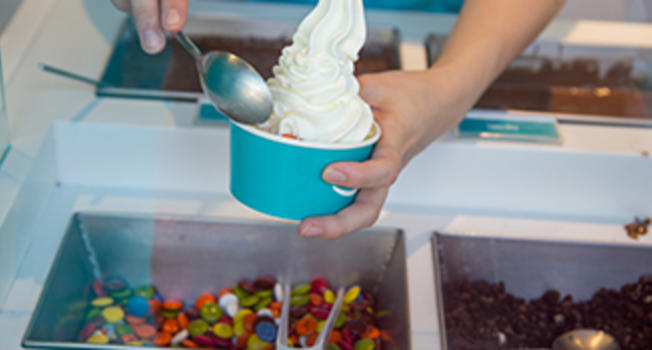
frozen yogurts
 

Energy use at a glance

  • Commercial frozen yogurt machines, also known as soft-serve machines, use a lot of energy. One unit alone may draw 2.5 kilowatts (kW) to 6 kW of electricity, depending on features; number of compressors; cooling system (air-cooled versus water-cooled); and efficiency of the condenser, fan motor and beater motor for blending product in the freezing cylinder.
  • Frozen yogurt machines emit excess heat ranging from 7,200 British thermal units (Btu) to 12,000 Btu per machine. This in turn increases the cooling load in the surrounding space – and air-conditioning costs for the store.

Tips and strategies to help you save

  • Two methods for cooling the motors in a soft-serve machine are:

    – Air-cooled with a fan: Exhaust heat from frozen yogurt machines via duct away from adjoining machines and outside the shop.
    – Water-cooled (if store’s ventilation can’t effectively exhaust hot air): Another option to consider, instead of the system that recycles regular water and increases your water costs, is installing a water cooling system that uses propylene glycol (antifreeze) in a closed-loop chiller located outside.
    – Clean condensers on air-cooled machines at least once a month to prevent dust, lint and debris from building up.
  • Consider staggering start-up every 15 minutes for one or two frozen yogurt machines at a time to reduce electricity demand (kW).

Actual savings may vary and will depend on various factors, including geographic location, weather conditions, equipment installed, usage rates and similar factors.

Open
Religious/congregational facilities energy usage/tips


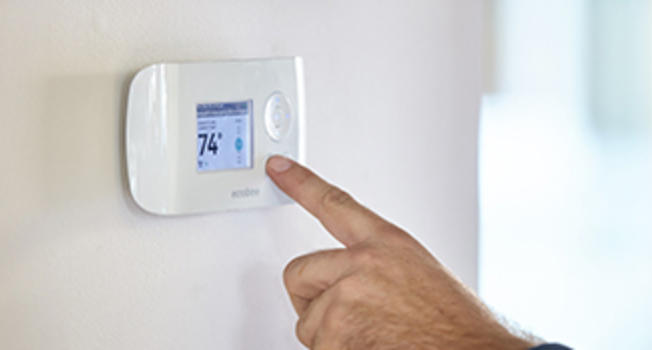
“The free smart thermostats have helped my business achieve significant savings.”Personal Care Service
—David P., Newbreak Church

Energy use at a glance

Faith-based facilities typically have fewer operating hours and experience large swings in occupancy. Brief the congregation on how to use systems and the importance of turning things off and/or down.

  • Lighting and cooling represent the most significant electrical loads in congregational buildings.
  • “Plug loads,” such as amplified musical instruments, audio-visual equipment, and microphones, can consume up to 30% of electricity.

Tips & strategies to help save

  • Install or use dimmers/occupancy sensors to lower or control lighting levels in daylight areas.
  • Turn off commercial coffee pots when not in use as they can consumer up to 1800 watts each.
  • Check out the rebates available for commercial kitchens or come try out energy-efficient kitchen equipment at our Energy Innovation Center.

– Ice machines: Larger ice machines are generally more efficient than two smaller ones; make ice during the off-peak hours; consider installing a timer.

Actual savings may vary and will depend on various factors, including geographic location, weather conditions, equipment installed, usage rates and similar factors.

Open