
More ways to save with super off-peak
More weekday hours at lower prices. More opportunities to save.
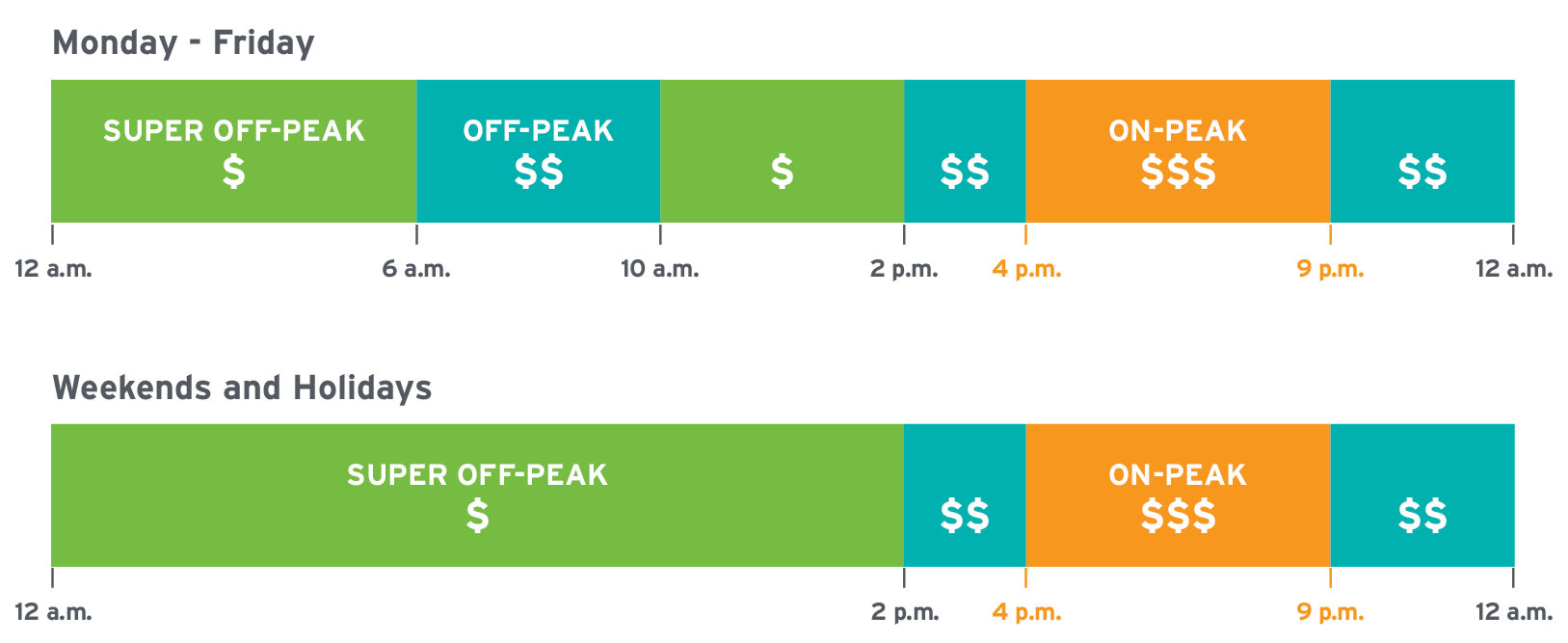
Business Time-of-Use (TOU) plans with super off-peak pricing now have expanded hours from 10 a.m. to 2 p.m., Monday through Friday, year-round.
This update gives businesses more weekday hours to shift energy use to lower-priced periods—helping to reduce energy costs.

Turn daytime energy use into savings
Super off-peak hours are designed to align with times when energy is more available and less expensive. By shifting energy use into this expanded midday window, your business can:
- Pay less for electricity by using it during lower-priced hours
- Take advantage of daytime flexibility, in addition to nights and early mornings
- Shift energy use away from on-peak hours when demand is highest to help the grid
Shifting tasks like running equipment and machinery or operating HVAC systems during lower-priced periods can lead to savings over time.
Ways to save with super off-peak
Make the most of these lower-priced hours by shifting energy use when it works for your operations:

Shift to save
Schedule equipment, machinery, batch processing, sanitation cycles or prep work during super off‑peak hours.

Optimize HVAC use
Pre‑cool or pre‑heat workspaces so HVAC systems run less during higher‑priced peak hours.

Adjust equipment schedules
Run facility equipment and support systems midday or overnight, when possible.

Shift charging where applicable
Charge forklifts, tools, batteries or EV fleet vehicles during the lowest‑price periods.

Review ventilation and lighting schedules
Align non‑essential systems with super off‑peak hours when feasible.

Educate staff on super off-peak pricing
Share when lower-priced hours occur and why scheduling certain activities during these times matters for your business.

Monitor usage patterns regularly
Reviewing energy usage can help identify additional opportunities to shift load into lower‑priced periods.
Not on a plan with super off-peak?
Depending on when your business uses energy, you may benefit from a plan with super off-peak.
Sign in to My Energy Center to view a personalized pricing plan recommendation based on your business’s actual energy usage—and see whether a TOU plan with super off‑peak pricing may be a good fit.
FAQs
Weekdays:
- 12 a.m. to 6 a.m.
- 10 a.m. to 2 p.m.
Weekends:
- 12 a.m. to 2 p.m.
Previously available only in March and April, your business can now take advantage of lower-priced energy during this time all year long.
You can check whether your business’ current plan includes super off-peak hours by signing in to My Energy Center and reviewing your bill and electric usage. You’ll also see your plan details and pricing periods. Some of our most popular business plans with super off-peak include TOU-A2, TOU-A3, TOU-M, AL-TOU-M, AL-TOU-L, AL-TOU2, DG-R-M and DG-R-L.
How do I compare pricing plans? You can explore and change plans by signing in to My Energy Center. You’ll see a personalized pricing plan recommendation based on your actual energy usage to help determine whether a Time-of-Use (TOU) plan with super off-peak pricing may be a good fit for your business.
Overnight charging is still a great choice, but it’s no longer your only option. Super off-peak hours continue overnight (12 a.m. to 6 a.m.) and now also include daytime hours from 10 a.m. to 2 p.m. That means you can charge EVs or equipment when it works best for your business, whether that’s overnight, during the day, or both.
Yes. Solar systems produce energy during the day, so shifting energy-intensive activities into super off-peak hours can help you better align your business’ energy use when panels generate the most electricity.
If your business has battery storage, you may be able to store energy between 10 a.m. and 2 p.m. and use it later when prices are higher. This can help you use less electricity from the grid and lower energy costs.
Sign in to My Energy Center to review your usage and plan options.
Actual savings may vary and will depend on various factors, including geographic location, weather conditions, equipment installed, usage rates, and similar factors. Completing multiple energy-saving measures will not necessarily result in cumulative savings.