
7-Day PSPS Potential
Fri
10/16
Not
Forecasted
Sat
10/17
Not
Forecasted
Sun
10/18
Not
Forecasted
Mon
10/19
Not
Forecasted
Tue
10/20
Not
Forecasted
Wed
10/21
Not
Forecasted
Thu
10/22
Not
Forecasted
During extreme fire weather, we may temporarily turn off power in certain areas to keep you and your community safe. This is called a Public Safety Power Shutoff, or PSPS.
We understand that losing power can be disruptive. That's why a PSPS is used only when strong winds and dry conditions create a significant risk that electrical equipment could spark a wildfire.
Making The Decision To Shut Off Power
A PSPS is never a decision we make lightly. Before we consider turning off power, our meteorologists and wildfire experts carefully evaluate forecast information, field conditions and possible safety risks. Our goal is to help protect lives, homes and businesses when wildfire risk becomes extreme. We understand the challenges a shutoff may create and we work to limit impacts while taking steps to help keep our region safe.

Weather & Wildfire Conditions
We monitor conditions that may increase wildfire risk. These conditions include low humidity, dry vegetation and strong winds that could blow branches or debris into power lines.

Tools & Technology
Our expert meteorology team uses advanced forecasts, weather models, field inspections, weather stations, cameras and other tools to monitor wildfire risk.
PSPS Notifications: What Can You Expect
We may begin coordinating with community organizations and public safety agencies several days before a possible PSPS. You can expect direct alerts from us starting 24–48 hours before a shutoff, when forecasts show dangerous fire weather conditions moving closer. As conditions change, we’ll continue sending updates so you can plan and prepare.

3–10 Days Before a PSPS
When weather forecasts show the potential for dangerous conditions, we'll closely monitor the risk for wildfire in specific areas. We may also begin public safety and regional notifications at this time.

24–48 Hours Before a PSPS
We'll continue to monitor weather conditions and communicate with affected communities. We'll also coordinate with first responders and public safety agencies.
CUSTOMER NOTIFICATIONS
If your area may be affected, we'll begin notifying you approximately 48 hours before a possible PSPS.
You'll receive a follow-up notice approximately 24 hours before a possible PSPS if the increased fire risk continues and a shutoff remains likely.

Day of
PSPS
We'll notify affected communities, government agencies and public safety agencies that power has been shut off and that Community Resource Centers (CRCs) are open.
CUSTOMER NOTIFICATIONS
A few hours before the shutoff, we'll send you a confirmation that a PSPS is expected and the start time.
When power is shut off, we'll notify you that the PSPS has begun and provide CRC addresses and hours.
During the outage, we'll send you regular updates about weather conditions, safety patrols and estimated restoration times.

Power Is Restored
Once weather conditions are safe, our field crews and drones will inspect overhead power lines to make sure there are no damages from high winds and that they are safe to restore and operate.
CUSTOMER NOTIFICATIONS
Once power is restored, we'll send you a final notice confirming that your service is back on.
How We May Contact You
We may contact you by phone, text message, email or all of the above. You may also see alerts in the Alerts by SDGE mobile app. If you do not receive an alert directly from us, make sure your contact information is updated in My Energy Center. You can also find the latest PSPS information in the resources listed below:
Social Media
Local Agencies and Community Partners
211 San Diego and 211 Orange County
Support Available To You During a PSPS

Community Resource Centers
During a PSPS, Community Resource Centers, or CRCs, will open in or near the communities where power has been turned off. These centers offer free Wi-Fi, water, ice, snacks, device charging and the latest outage information. Centers are open during specific hours and will remain open daily until weather conditions improve and power can be safely turned on in your area.

Alerts by SDGE mobile app
Stay up-to-date on a PSPS by downloading our Alerts by SDGE mobile app. It provides real-time outage updates and estimated restoration times. You can track up to 5 different addresses and you do not need an account number. It can also provide directions to an open Community Resource Center.
Extra Support Available To You
During a PSPS, we offer additional help if you have medical, access or functional needs.

Medical Baseline (MBL) Program
If you have a condition that requires electricity for medical equipment, you may be eligible for the Medical Baseline Program. The program offers electricity at a lower rate. If you're enrolled, you may also receive additional support during a PSPS, including in-person contact attempts by SDG&E or partner agencies.

211 San Diego and 211 Orange County
During a PSPS, if you have medical, access or functional needs, 211 can connect you with community, health and disaster-related resources.
Support is free, confidential and available 24 hours a day throughout the PSPS. Assistance may include information about vouchers or discounts for hotel stays, food resources, transportation assistance and other health-related support. Services are available in over 200 languages.
Visit 211 San Diego or 211 Orange County or call 2-1-1.

Update Your Contact Information
Keep your contact information up to date so we can send you timely alerts. Alerts can be critical if you depend on power for medical devices or safety equipment. Alerts include:
- Early warnings — often 24 to 48 hours before a PSPS
- Updates when power may be turned off or restored
- Alerts by text message, phone and email
PSPS Power Restoration Process
We can only begin the process to restore power once wind speeds have remained low for a sustained period of time. The process could be further delayed if there is fire activity or ongoing severe weather conditions.
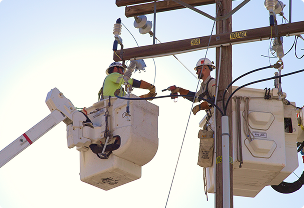
Daytime Inspection
We cannot safely inspect for damage when it is dark. Field crews need 4–8 hours of daylight to inspect power lines and other equipment for hazards.
If you see crews in your area, but your power remains out, know that they are working to assess damage, and plan for repairs and restoration.
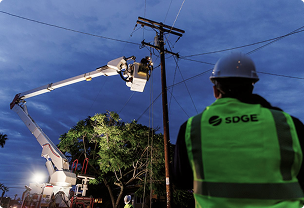
Urgent Repairs
During a shutoff, we fix urgent safety issues first. We'll turn your power back on once we are sure equipment will operate safely.
We work hard to restore power as quickly and safely as we can. However, nearby neighborhoods may be served by different circuits. If you see lights on nearby but your power is still off, you may be on a different circuit.
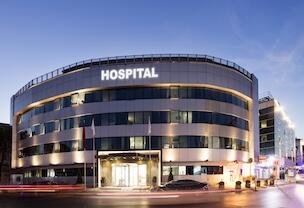
Prioritized Restoration
Our goal is to restore everyone's power as quickly as possible. However, to support the safety of our communities, we do prioritize turning the power back on for critical facilities like hospitals, fire stations and police stations.
Learn more about PSPS Critical Facilities.
Frequently Asked Questions
A Public Safety Power Shutoff, or PSPS, is when we temporarily shut off power to specific areas or communities to help reduce the risk of wildfire. When our region experiences extreme weather conditions like strong winds, low humidity and dry vegetation, we have an increased chance of wildfires. We proactively shut off power in specific areas to reduce that risk.
We understand that a power shutoff is disruptive. But it is a critical safety measure designed to help protect you, your family, businesses, first responders and communities from the threat of wildfires.
We evaluate several things before making the decision to shut off power, including:
- Wind speed and direction
- Temperature and humidity
- Dry vegetation
- In-person ground inspections
- Input from fire agencies
We also use weather stations, camera networks and other advanced tools to help us make more precise decisions during a PSPS. This helps us reduce the overall number of customers whose power is turned off and limits areas to the ones facing the highest wildfire risk.
We know a power shut off can be difficult for you and your family. Your power could be shut off for several hours to multiple days, depending on the weather and if equipment needs repairs.
Before we restore power, weather conditions must improve and crews must inspect affected power lines and equipment.
Once weather conditions improve, field crews will need to inspect lines, remove hazards and repair any damage before turning power back on. Field crews can only patrol safely when there is daylight. In rural or rugged terrain, inspections may take longer, especially if helicopters are needed. Helicopters can only operate during daylight and when winds are calm enough for safe flight.
We will also prioritize turning power back on first for critical facilities like hospitals, and then residential neighborhoods. Restoring power could take hours or days depending on the conditions of the electric system.
Power lines stretch across many miles and travel through different communities. If any part of the line serving your area passes through a location with high wildfire risk, we may need to turn off the entire line. That means your power could be off even when conditions are calm in your neighborhood. A nearby home may still have power if it is served by a different line or circuit.
Underground power lines are generally less exposed to weather, but they are still connected to the larger electric system.
Many underground lines connect to overhead power lines or above-ground equipment, such as transformers and switches. If any part of the system serving your area must be turned off for safety, your underground line may also lose power.
Strong Santa Anas can blow palm fronds, branches and other debris into electrical equipment. When debris makes contact with electrical equipment, it can cause a spark. If nearby vegetation is very dry in the surrounding areas, a fire can spread quickly. Temporarily turning off power in areas with extreme fire weather can help reduce the risk of a wildfire starting.
Before a Power Shutoff
Stay informed
- Make sure your contact information within My Energy Center is up to date so you can receive PSPS notifications
- Download the Alerts by SDGE app to receive updates on your mobile device
- Bookmark SDGEtoday.com for the latest information
- Know the location of your nearest Community Resource Center where you can access resources and support during a PSPS
Create an emergency plan
- Designate a family meeting place in case family members become separated
- Keep hard copies of important phone numbers and emergency contacts
- Include pets and livestock in your emergency plan
- Learn how to manually open your garage door if power is unavailable
- Pack a go-bag with essentials such as medications, important documents, water, snacks, chargers and pet supplies
Prepare your home and supplies
- Refresh your emergency kit with flashlights, batteries, a first-aid kit, cash and other essentials
- Charge your phones, laptops, portable battery packs and other important devices
- Keep vehicle fuel tanks at least half full when possible
- Learn more about the Generator Assistance Program and see if you qualify for a rebate
During a Power Shutoff
Use power wisely
- Use flashlights instead of candles to reduce fire risk
- Limit opening refrigerators and freezers to help keep food cold longer
- Unplug sensitive electronics to help protect them from potential power surges when service is restored
Stay connected
- Monitor updates through the Alerts by SDGE app and SDGEtoday.com
- If you need additional assistance during an emergency, contact 211 to connect with local resources and support services; Call 2-1-1 or visit 211 San Diego or 211 Orange County
If you or someone in your household relies on electricity for health-related needs, it's important to prepare early.
Plan for medical equipment and medications
- Identify backup power options for essential medical equipment
- Have a plan for refrigerated medications if power is unavailable
- Keep extra batteries, chargers or other necessary supplies on hand
- Discuss emergency backup plans with your healthcare provider if needed
Explore available support programs
- Medical Baseline Program: Eligible customers may receive additional energy at a lower cost, additional notifications if needed and support related to backup power options. Learn more at SDG&E Medical Baseline Program
- Backup Power Programs: Rebates, grants and free batteries or solar equipment may be available for qualified customers in high fire-risk areas
- 211 Partnership: During emergencies, 211 may help connect customers with transportation, vouchers or discounts for hotel stays, meals, wellness checks and other support services; Call 2-1-1 or visit 211 San Diego or 211 Orange County
- Accessible Alerts (AHAS): Emergency messages in formats accessible to Deaf, Blind, Hard of Hearing or Deaf-Blind customers are available here
If you live in a High Fire Threat District and have experienced one or more PSPS events, you may qualify for the generator rebate program.
- $300 on a new fuel generator
- $150 on a portable power station
- You may qualify for extra savings if you're enrolled in CARE or FERA
You can apply for a rebate after purchase or use an instant coupon at select stores. Find details on our Generator Assistance Program page.